← All postsFor tattoo + beauty prosMay 29, 2026 · 5 min read
Tattoo & Beauty Service Consent Form: Free Template + What to Include
A beauty service consent form documents your client's agreement to risks, health disclosures, and aftercare before the session — here is every section it needs and a free ESIGN-ready template.
A beauty service consent form documents your client's agreement to the risks, health disclosures, and aftercare involved before you start their service. Without one — or with a paper copy in a filing cabinet you can't always find — you have no verifiable record of what was agreed to, or when.
Here is every section the form needs to cover and a free template you can send digitally before the client walks in.
Why Most Beauty Consent Forms Don't Hold Up in a Dispute
The two most common failure modes aren't missing signatures. They're missing forms and disputed content.
A client claims they never agreed to the holiday cancellation policy. They didn't see the health disclosure section. They thought the photo release was opt-out, not opt-in. None of this makes either party dishonest — it reflects the fact that paper consent forms are routinely skimmed, not read, and sometimes not located at all when needed months later.
A $450 microblading appointment or a $900 sleeve tattoo can end in a small-claims filing if a studio can't produce a signed, dated form matching the version the client actually reviewed. Courts want three things: who signed, when they signed, and what the form said at the time of signing. Paper forms reliably provide at most one of these.
The 8 Sections Every Beauty Service Consent Form Needs
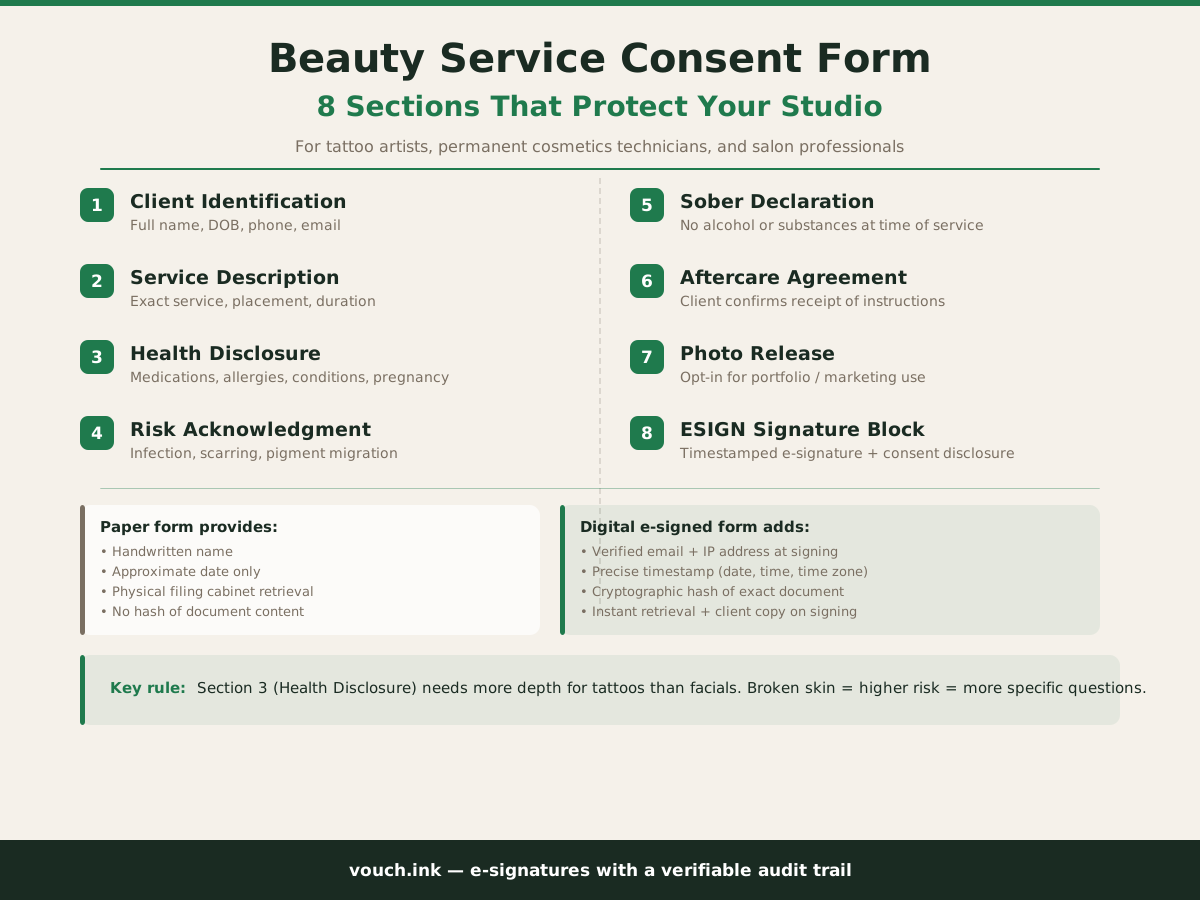
A solid consent form covers these eight areas regardless of service type — tattoos, permanent cosmetics, lash extensions, or chemical peels.
1. Client identification. Full legal name, date of birth, phone, and email. If a dispute comes up months later, you need to tie the record to the right person without ambiguity.
2. Service description. What specifically is being done, where on the body, and the approximate appointment time. "Tattoo" is too vague. "Floral sleeve piece, upper left arm, approximately 4 hours" is not.
3. Health disclosure. The highest-stakes section. Ask explicitly about blood-thinning medications and anticoagulants (warfarin, aspirin regimens), diabetes, keloid-prone skin, active skin infections or open wounds in the service area, allergies to metals, latex, or pigment ingredients, immune-suppressing conditions, and pregnancy. For permanent cosmetics, also ask about recent Botox or filler in the treatment area within the past two weeks.
4. Risk acknowledgment. Spell out the specific risks for your service type: infection, allergic reaction, scarring, pigment migration for tattoos, or chemical sensitivity and hyperpigmentation for chemical treatments. Have the client acknowledge each category — not just sign at the bottom.
5. Sober declaration. The client confirms they're not under the influence of alcohol or substances. A single checkbox and signature. Standard for body art appointments.
6. Aftercare agreement. The client confirms they've received and understood aftercare instructions. If you send them a digital aftercare sheet at the moment they sign, that delivery timestamp becomes part of the record.
7. Photo release. Keep this opt-in, not opt-out. A clear checkbox: "I consent to photos of this work being used for portfolio or promotional purposes." Clients who don't check it haven't consented.
8. ESIGN-compliant signature block. The signature section needs to include the consent disclosure language the ESIGN Act requires: a statement that the client is agreeing to sign electronically and knows they can request a paper copy.
| Paper consent form |
Digital e-signed consent form |
| Handwritten name |
Verified email tied to the signing event |
| Approximate date |
Precise timestamp with time zone |
| Signed document |
Cryptographic hash of the exact document version |
| Physical filing cabinet |
Searchable by client name or date in seconds |
| Manual client copy |
Instant delivery to client inbox at signing |
Tattoo Consent vs. Salon Consent: What Changes
The core structure is the same. The health disclosure section needs more depth for services that break the skin barrier.
Tattoo consent forms should ask specifically about hemophilia, blood-clotting disorders, and conditions requiring daily anticoagulant medication. A healing complication that would be minor after a facial can become a genuine medical issue when the skin is open.
Permanent cosmetics — microblading, lip blushing, powder brows — sit in between. They carry tattoo-level risk (broken skin, pigment migration) but are often regulated under aesthetics licensing rather than body art statutes. The Minnesota Department of Health's body art consent form is a well-reviewed example of what regulators expect. Check your own state's body art statutes before finalizing your version.
For minors: most states prohibit tattooing anyone under 18 regardless of parental consent. Many states allow facial services and waxing with a guardian signature. Verify your state's specific statute before booking any client under 18 — local rules vary enough that general guidance isn't reliable here.
How the Digital Signing Workflow Runs
Here's what it looks like when a client books and the consent form is digital:
- Client receives a form link when they book, or the day before their appointment
- They review the health disclosure, risks, and aftercare sections on their phone
- They apply their e-signature — typed name, drawn, or click-to-sign
- A signed copy goes to their inbox; you receive a copy with the complete audit trail attached
The audit trail records the timestamp, the signer's IP address, device type, and a hash of the exact document they signed. If a client claims the form was different from what they agreed to, the hash comparison answers it directly. For a detailed explanation of what audit trails capture and how the hashing works, see vouch.ink's compliance guide.
If you're evaluating tools for running this workflow, see what's included in each plan on the pricing page.
The Free Template
Copy this as your starting point and expand the health disclosure section for tattoo or permanent cosmetics work.
BEAUTY SERVICE CONSENT FORM

Client Name: _____________________ DOB: ___________
Service: _________________________ Date: __________

HEALTH DISCLOSURE — check all that apply:
[ ] Blood-thinning medications or anticoagulants
[ ] Diabetes or immune-suppressing condition
[ ] Active skin infection or open wound in service area
[ ] Known allergy to metals, latex, or pigments
[ ] Pregnancy or nursing
[ ] Other: ________________________

RISK ACKNOWLEDGMENT
I understand the risks of this service, including skin irritation,
allergic reaction, infection, and scarring. I am not under the
influence of alcohol or substances.

AFTERCARE
I have received aftercare instructions and agree to follow them.

PHOTO RELEASE
[ ] I consent  [ ] I do not consent to photos being used for
portfolio or marketing purposes.

SIGNATURE: _________________________ DATE: __________
Send this form digitally, collect a timestamped e-signature, and keep the full audit trail for every session — get started at vouch.ink.