← All postsFor accountants + bookkeepersJune 12, 2026 · 5 min read
The Bookkeeper's Engagement Letter: Scope, Out-of-Scope, and Getting Paid
A bookkeeper engagement letter sets the scope, fees, and exclusions that protect you when a client assumes bookkeeping includes everything — including tax prep, financial advice, and after-hours calls.
A bookkeeper engagement letter is a written agreement that defines which services you'll provide, what you won't touch, what the client owes you, and what happens if either party wants to walk. Without one, "I handle the bookkeeping" is a blank check — and clients fill in the amount.
Most disputes between bookkeepers and clients don't start with dishonesty. They start with a client who genuinely believed monthly bank reconciliation included payroll setup, tax prep, and answering accounting questions on short notice. A clear engagement letter closes that gap before work starts, not after four months of out-of-scope labor you can't invoice for.
Here's exactly what a complete letter covers, which clauses almost every free template skips, and how to get it signed before you open a single spreadsheet.
What a Bookkeeper Engagement Letter Actually Covers
A complete bookkeeper engagement letter has eight components. Miss any of them and you're negotiating from memory when a dispute arrives:
- Party identification — Full legal names, entity types, and contact information for both parties.
- Scope of services — Specific deliverables: which accounts get reconciled, how many employees are on payroll, what financial statements you'll prepare and by which date each month.
- Client responsibilities — Timely document delivery, platform access credentials, and a clause that shifts liability for errors caused by inaccurate data the client provided. This one clause alone can protect you when a client's own bad data produces incorrect output.
- Fees and payment terms — Flat fee, hourly, or retainer structure; billing frequency; accepted payment methods; and late payment charges.
- Engagement duration — Start date, whether ongoing or fixed-term, and exactly how renewal works.
- Termination — How either party ends the relationship (typically 30 days' written notice) and what happens to work in progress and client data when they do.
- Confidentiality — Client financial records don't leave your practice without authorization, and that obligation survives the end of the engagement.
- Signature block — Both parties sign, with dates. Not just the client. A mutual signature confirms that you've also agreed to the terms, which matters if the client later claims they didn't understand the scope.
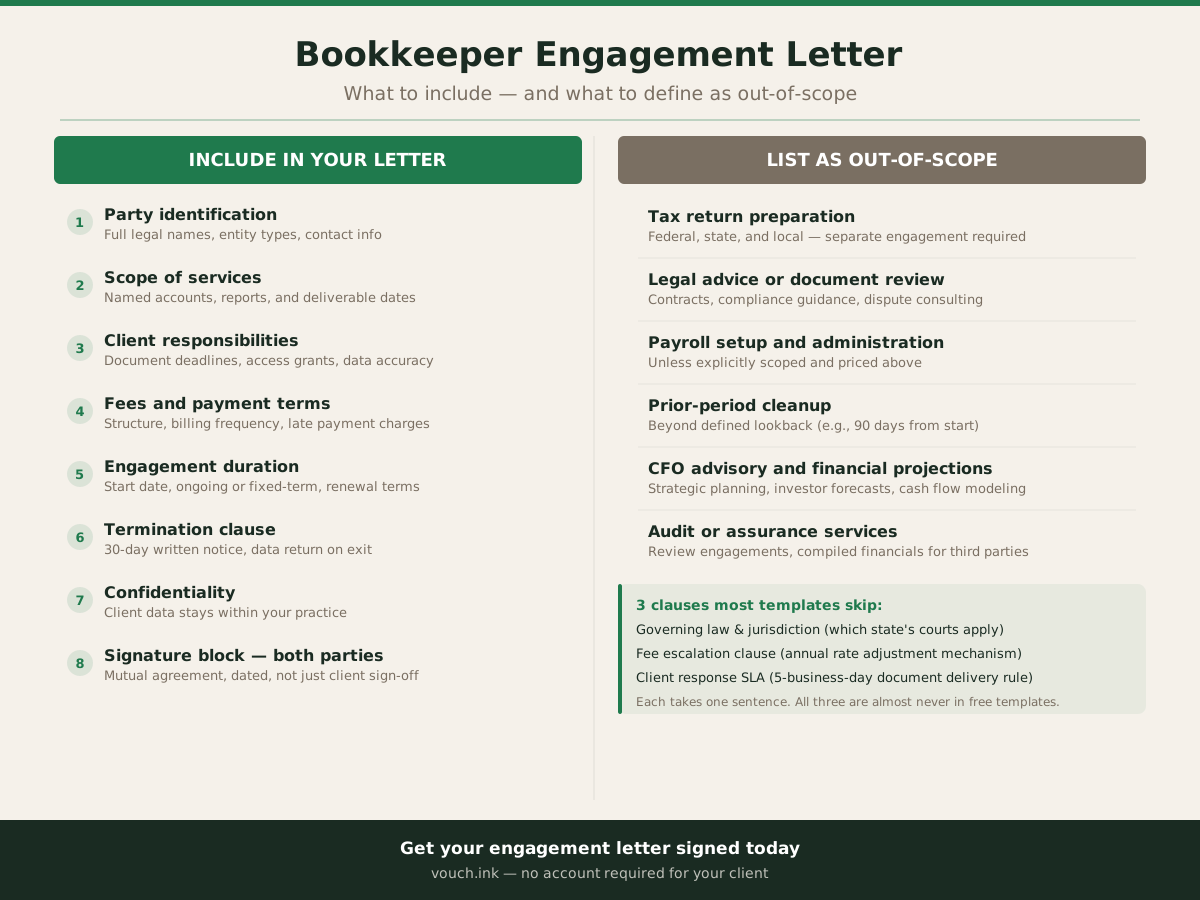
Every one of these is standard. The component that protects your income most isn't this list — it's what you explicitly define as outside it.
The Out-of-Scope List: Your Best Defense Against Scope Creep
Templates focus on what you will do. The clauses that protect your income are the ones listing what you won't.
A freelance bookkeeper serving a property manager with 47 units discovered this the hard way. Her letter said "monthly bookkeeping." Over eight months, client requests expanded: tracking deferred maintenance costs by individual unit, preparing cash flow projections for a refinance, and joining two lender calls to walk them through the financials. None of it was in scope. She completed roughly $11,400 worth of work she never charged for, because the letter didn't say those services were excluded — and she didn't feel confident enough to push back without that written foundation.
Common exclusions that belong in every accounting engagement letter:
- Federal, state, and local tax return preparation
- Legal advice or document review of any kind
- Payroll setup, administration, and related compliance filings (unless explicitly included)
- Prior-period cleanup beyond a defined lookback window — for example, 90 days prior to the engagement start date
- CFO-level advisory, financial projections, and business planning
- Audit, review, or assurance services
The IRS's guidance on business recordkeeping underscores why written documentation of service boundaries — separate from the records themselves — carries weight when a dispute arises.
| Factor |
Informal Agreement |
Bookkeeper Engagement Letter |
| Scope |
Vague or verbal |
Itemized and signed |
| Out-of-scope requests |
Awkward conversation after the fact |
Addressed by written clause |
| Fee dispute resolution |
Based on memory |
Based on signed document |
| Termination terms |
Unclear |
30-day written notice |
| Client data liability |
Assumed |
Documented |
| Protection for both parties |
Minimal |
Clear |
Three Clauses Every Bookkeeper Contract Template Skips
Most free templates get the basics right: scope, fees, termination. These three are almost always absent, and they're the ones you'll miss if things go sideways.
Governing law and jurisdiction. If you're in Tennessee and your client is in Oregon, which state's courts govern a dispute? Without this clause, you find out during litigation. One sentence resolves it: "This agreement is governed by the laws of [State], and disputes shall be resolved in [County] courts." Takes 20 seconds to add. Saves a lot more than that.
Fee escalation clause. Your rates will increase. Build the mechanism into the original letter: "Fees are subject to annual adjustment, with 30 days' written notice to the client." Without it, every rate conversation requires justifying your value from scratch. With it, it's an administrative notification — not a negotiation.
Client response SLA. You can't close February's books if the client takes three weeks to forward their bank statements. Add a clause: "Client agrees to provide requested documents and access within five business days of any request. Delays caused by late client responses extend all deliverable deadlines by an equivalent period." This protects your schedule and your professional reputation when a client blames you for late financials that were caused by their own slow responses.
These aren't exotic legal provisions. They're three specific gaps in standard bookkeeper contract templates that cause real-world friction, and each one takes a sentence to close.
Getting the Letter Signed Before Work Starts
The letter only protects you if it's signed before you open the first account. Bookkeepers are uniquely susceptible to "just get started" pressure — clients who want work to begin immediately and treat the paperwork as a formality they'll handle later.
The main culprit is friction in the signing process. You email a PDF. The client says they'll print and sign it. Three weeks pass. You're deep into reconciliation work with nothing on record. The answer isn't more follow-up emails — it's removing the friction so signing takes 90 seconds instead of three weeks.
A link the client can open on their phone, review, and complete without downloading anything or creating an account gets the signature back the same day in most cases. The timestamp records exactly when the agreement took effect — no back-and-forth about what was agreed, when, or by whom.
Once that signature is on file, the engagement letter becomes the foundation for everything else: which accounts you access, when the first deliverable is due, and what the client owes on the first billing cycle. Nothing starts without it. That's not bureaucracy — it's how you get paid for the right work at the right rate, without the conversation you didn't want to have eight months later.
For solo bookkeepers who also issue contracts as an independent contractor, the independent contractor agreement template covers the scope, liability, and termination clauses that overlap significantly with a bookkeeper engagement letter.
Review the vouch.ink signing workflow at /pricing, or get started today and send your first engagement letter.