Contract Signed Out of Order: What Happens Next?
When parties sign a contract in an unexpected sequence, it can raise questions about the agreement's validity. Understanding the implications of out-of-order signatures is important for all involved.
When parties sign a contract in an unexpected sequence, it can raise questions about the agreement's validity. Understanding the implications of out-of-order signatures is important for all involved.
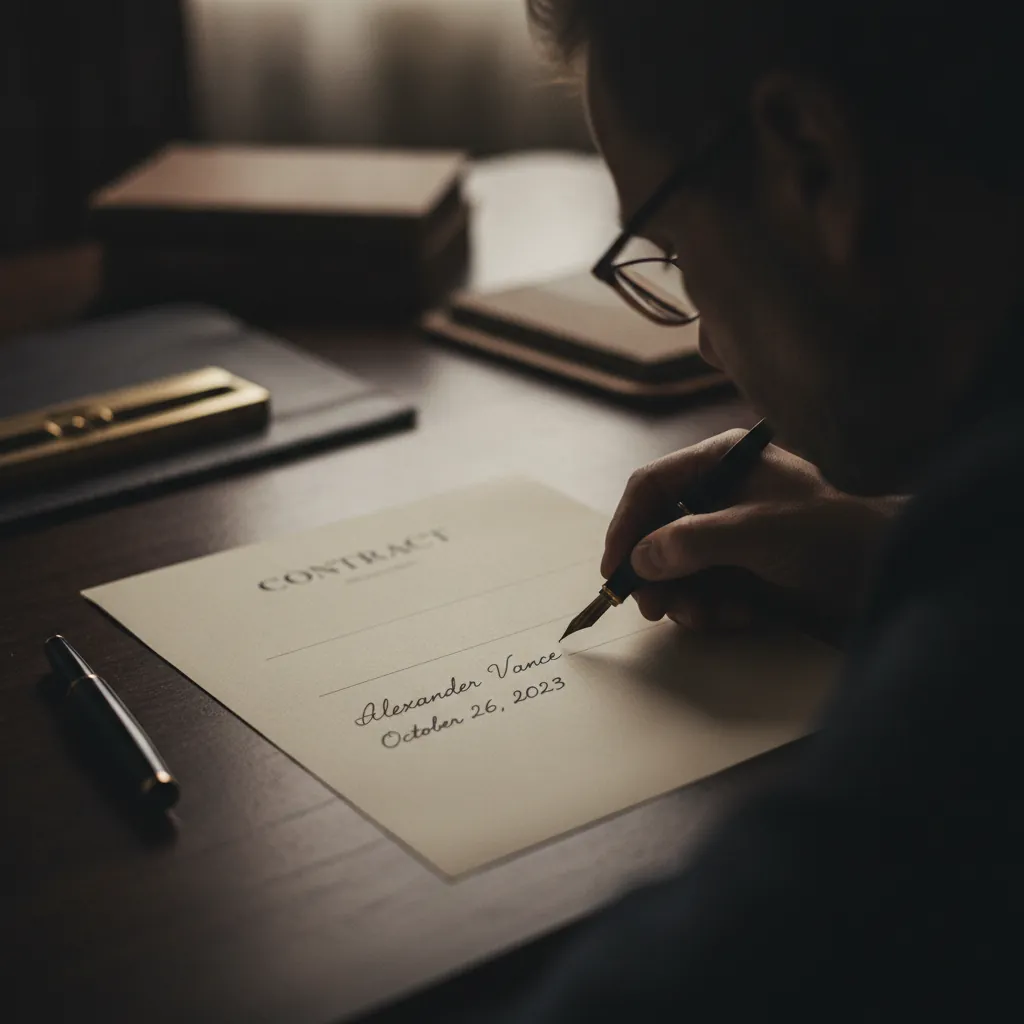
You’ve sent out a contract. Maybe it’s for a photography gig, a remodeling job, or a new tenant. You expect the client to sign it, then you sign it, and everything is squared away. But what happens when the signatures come in a different order than you expected? Or a party signs a document that seems to depend on another agreement not yet finalized? This isn't just a minor administrative hiccup. It can create real confusion, delay projects, and even cast doubt on the legal standing of your agreements.
For solo operators and small teams, time is money. Every minute spent untangling a document problem is a minute not spent on billable work or growing your business. Understanding the implications of an "out-of-order" signature is important for keeping your operations smooth and your agreements solid.
When we talk about a contract being "signed out of order," we're usually referring to a situation where the sequence of signatures doesn't follow the logical or intended progression of the agreement. This isn't always about who signs first versus last. It can be more nuanced.
Consider these common scenarios:
These situations create ambiguity. They don't always invalidate a contract, but they certainly introduce questions that can be costly to answer later.
This is where things get a bit technical, but it's important for protecting your business. Generally speaking, contract law in the United States, guided by principles like the ESIGN Act and the Uniform Electronic Transactions Act (UETA), focuses on the mutual assent and intent of the parties. A contract is typically formed when there's an offer, acceptance, and consideration. The physical or chronological order of signatures isn't always the defining factor for validity.
For example, if you send a client a contract (an offer), and they sign it (acceptance), and you both intend for it to be a binding agreement, it might be considered valid even if you haven't signed it yet. Your subsequent actions, like starting work or accepting payment, could be seen as your acceptance.
However, just because it can be valid doesn't mean it's ideal. A clear, sequential signing process reduces potential disputes. When signatures are out of order, it can make it harder to prove:
The legal system often looks for clear evidence of agreement. A messy signing order can complicate that evidence.
Even if the law doesn't always demand a specific sequence, having one is a smart operational move. Think of it as setting up guardrails for your agreements.
A structured signing process isn't about legal technicalities alone. It's about operational efficiency and reducing future headaches.
Finding that a contract has been signed out of sequence isn't the end of the world, but it does require attention. Here's a look at what might happen and how to respond:
The key is to address the issue promptly. Don't let an out-of-order signature linger as an unresolved question mark over your agreement.
This is where a dedicated e-signature platform like vouch.ink makes a real difference for solo operators and small teams. It's not just about getting a signature; it's about getting a verifiable signature with a clear record.
This audit trail is ESIGN and UETA compliant, meaning it meets the legal requirements for electronic signatures in the United States. If there's ever a question about when or how a document was signed, this record provides objective, verifiable proof. 3. Document Version Control: If you need to make changes or have a document re-signed, vouch.ink helps manage different versions. This keeps your records clean and makes sure everyone is always looking at the most current, agreed-upon terms. 4. Proof of Intent: Even if a signature comes in an unexpected order, the detailed audit trail can help establish the parties' intent. If a client signs a document and then you sign it later, the audit trail shows both actions, providing a strong basis for arguing that mutual agreement was reached.
Using a system designed for clear, verifiable electronic agreements helps you avoid many of the issues associated with out-of-order signatures. It gives you peace of mind that your contracts stand on solid ground.
Dealing with contracts that are signed out of order can be a frustrating and confusing experience. It highlights the importance of not just getting a signature, but getting a signature that is clear, verifiable, and part of a well-documented process. For solo operators, photographers, contractors, landlords, and small agencies, your agreements are the backbone of your business. Protecting them means protecting your time, your reputation, and your income.
By understanding the potential pitfalls and using tools that provide clear, compliant audit trails, you can minimize risks and keep your operations running smoothly. Don't let administrative confusion cloud your agreements. Get a system that keeps your contracts clear and legally sound.
Ready to streamline your contract process and get verifiable e-signatures for free? Visit https://vouch.ink/ to get started. See how our plans stack up and find the right fit for your business at https://vouch.ink/pricing.
Q? How many parties can typically sign a contract using an e-signature service? A: Most e-signature services, including vouch.ink, support multiple signers, often allowing for 10 or more parties to sign a single document.
Q? What percentage of contract disputes are related to unclear terms or signing issues? A: While specific numbers vary, studies suggest that over 30% of contract disputes arise from ambiguities in terms, unclear execution, or a lack of proper documentation.
Q? How many minutes can an e-signature platform save a small business per contract compared to traditional paper methods? A: Businesses report saving an average of 60 minutes or more per contract by switching from paper-based signing to an e-signature platform.
Q? How many different types of documents can I sign with an ESIGN/UETA compliant platform? A: You can
Not always, but it can be a significant factor. In many jurisdictions, the intent of the parties and the final agreement are paramount, yet some specific contract types or clauses might require a particular signing sequence for 100% validity.