← All postsJune 11, 2026 · 4 min read
The ESIGN Consent Disclosure: What You Have to Show, What's Optional
Before anyone signs electronically, federal law may require you to show a specific disclosure — here's exactly what ESIGN mandates, what's up to you, and what most senders get wrong.
The ESIGN Act draws a clean line: five things you must show, everything else is optional. Most platforms bundle in several extras by default, which leads senders to assume everything they see is required. Knowing the difference matters when a consumer challenges a disclosure — or when you're drafting one from scratch.
What the ESIGN Act Requires in a Consent Disclosure
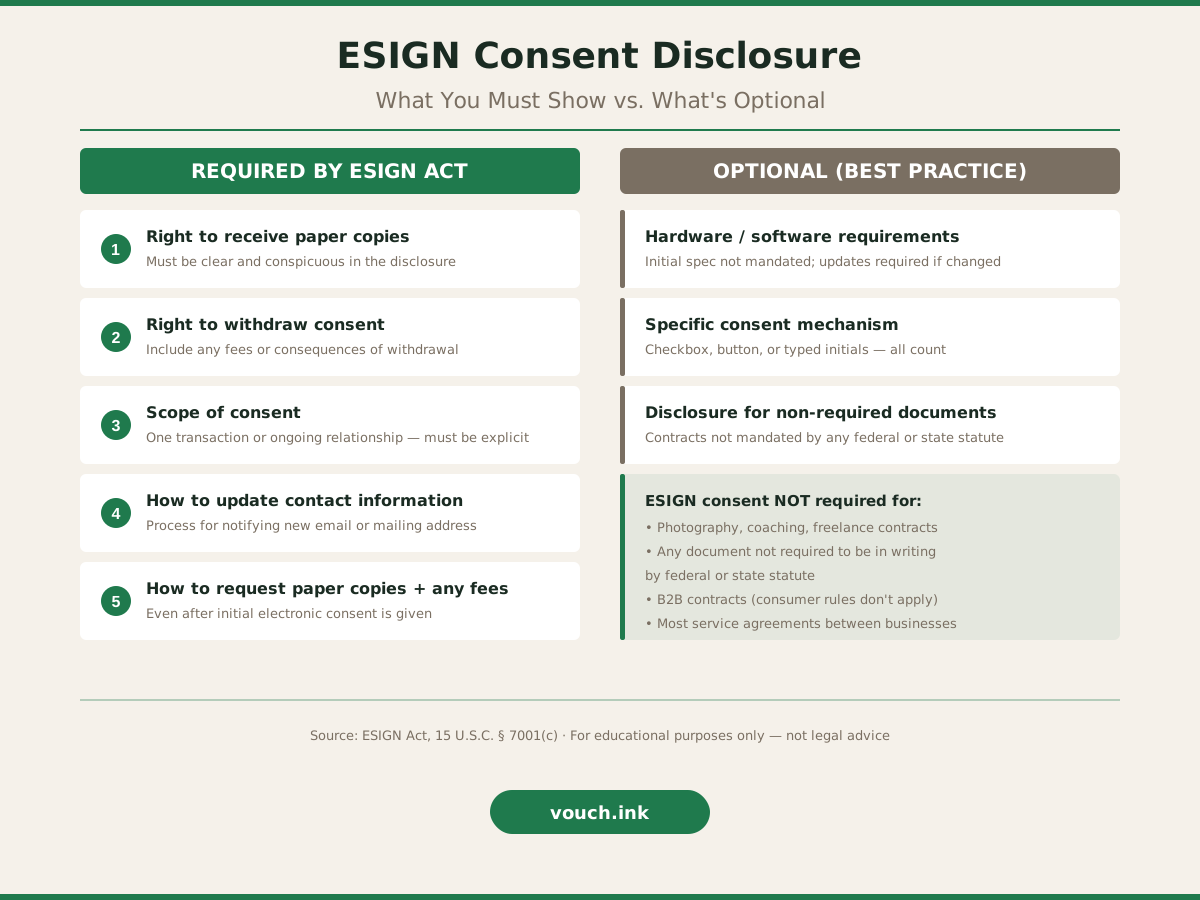
The ESIGN Act (15 U.S.C. § 7001) only applies when a document is already required by law to be in writing — federally-mandated loan disclosures, utility termination notices, TILA disclosures. For those records, five elements are non-negotiable before you request consent:
1. The right to receive a paper copy. Tell the consumer they can receive the record on paper or in non-electronic form. Don't bury this in your terms — courts look for it.
2. The right to withdraw consent — with conditions. Explain how to withdraw, and any fees or consequences that follow. If you charge $5 for a mailed copy, say so here. If consent withdrawal ends the relationship, that must be disclosed upfront.
3. The scope of consent. Is this consent for one transaction only, or does it cover future records in an ongoing relationship? Be explicit. A disclosure that's silent on scope is a gap a careful attorney will find.
4. How to update contact information. Tell the consumer how to notify you of a new email address or mailing address. Stale contact info is a common dispute trigger.
5. How to request paper copies after consent — and any fees. Even after agreeing to electronic delivery, consumers retain the right to request a paper copy. Your disclosure needs to state whether that costs anything.
That's the complete federal list. Five items.
What's Optional — But Worth Including Anyway
Two elements appear in nearly every platform's default disclosure form but aren't on the ESIGN Act's required list:
Hardware and software requirements. You must update the consumer if requirements change, but the initial hardware/software disclosure isn't explicitly mandated at the moment of first consent. Platforms include it as a practical safeguard — and you should too. Be specific: "a browser capable of opening PDFs on a device with current operating system" is more defensible than "standard computer."
The specific consent mechanism. ESIGN requires that you obtain affirmative consent — clicking "I agree" counts — but the exact mechanism (checkbox, button, typed initials) isn't prescribed. Your platform's default is almost certainly compliant. Just don't rely on pre-checked boxes, which courts treat as opt-out rather than opt-in.
What definitely doesn't require ESIGN consent: Any document that isn't legally required to be in writing. A photography contract, coaching agreement, freelance work-for-hire, or event vendor deposit form? No federal ESIGN consent required. The signature is still fully documented. You're protecting enforceability through sound signature mechanics — what makes an e-signature hold up comes down to intent, authentication, and audit trail, not ESIGN consent specifically.
Required vs. Optional at a Glance
| Element |
Required by ESIGN? |
Notes |
| Right to paper copy |
Yes |
Must be clear and conspicuous |
| Right to withdraw consent |
Yes |
Include fees and consequences |
| Scope (one-time vs. ongoing) |
Yes |
Silence creates ambiguity |
| How to update contact info |
Yes |
Email or address change process |
| Post-consent paper copy + fees |
Yes |
Applies even after initial consent |
| Hardware/software requirements |
No (updates required if changed) |
Best practice to include upfront |
| Specific consent mechanism |
No |
Any affirmative action qualifies |
| Disclosure for non-required docs |
No |
ESIGN consent not triggered |
A Real-World Scenario: The $12,000 Gap
A Baltimore property manager sends lease renewals to 47 tenants using an e-signature platform. Each lease is a legally required written record — ESIGN consent applies. Her disclosure covers the right to paper copies and withdrawal rights, but it doesn't say whether consent covers future renewals or just the current lease.
When a tenant disputes an amended renewal eight months later, the tenant's attorney argues the original consent didn't cover subsequent documents. The manager's attorney disagrees. Three weeks of back-and-forth, $12,000 in legal fees, and a settlement. One sentence — "This consent applies to all records in our ongoing tenancy relationship" — closes that argument at the first letter.
When the ESIGN Consent Requirement Doesn't Apply
If your contract has no statutory requirement to be in writing, you're outside the ESIGN Act's consent rules. That covers most service contracts between businesses, creative professionals, coaches, tutors, and tradespeople. You can include a consent disclosure as a best-practice gesture, and many platforms add one automatically — but absence of a formal ESIGN disclosure doesn't void a well-documented e-signature.
For the regulated space — financial services, healthcare, insurance, utilities — assume the disclosure is required and include it on every signing request. The cost of an unnecessary disclosure is one extra screen. The cost of a missing required one shows up later, after a complaint.
You can explore how Vouch.ink approaches compliance documentation for every signing event on our compliance page.
Ready to build an e-signature workflow with a complete consent and audit trail? Try vouch.ink →
