Electronic Signature vs. Wet Signature: When It Matters
Choosing between an electronic and a wet signature depends on legal requirements and specific document needs. Learn when each method is the right choice for your agreements.
Choosing between an electronic and a wet signature depends on legal requirements and specific document needs. Learn when each method is the right choice for your agreements.
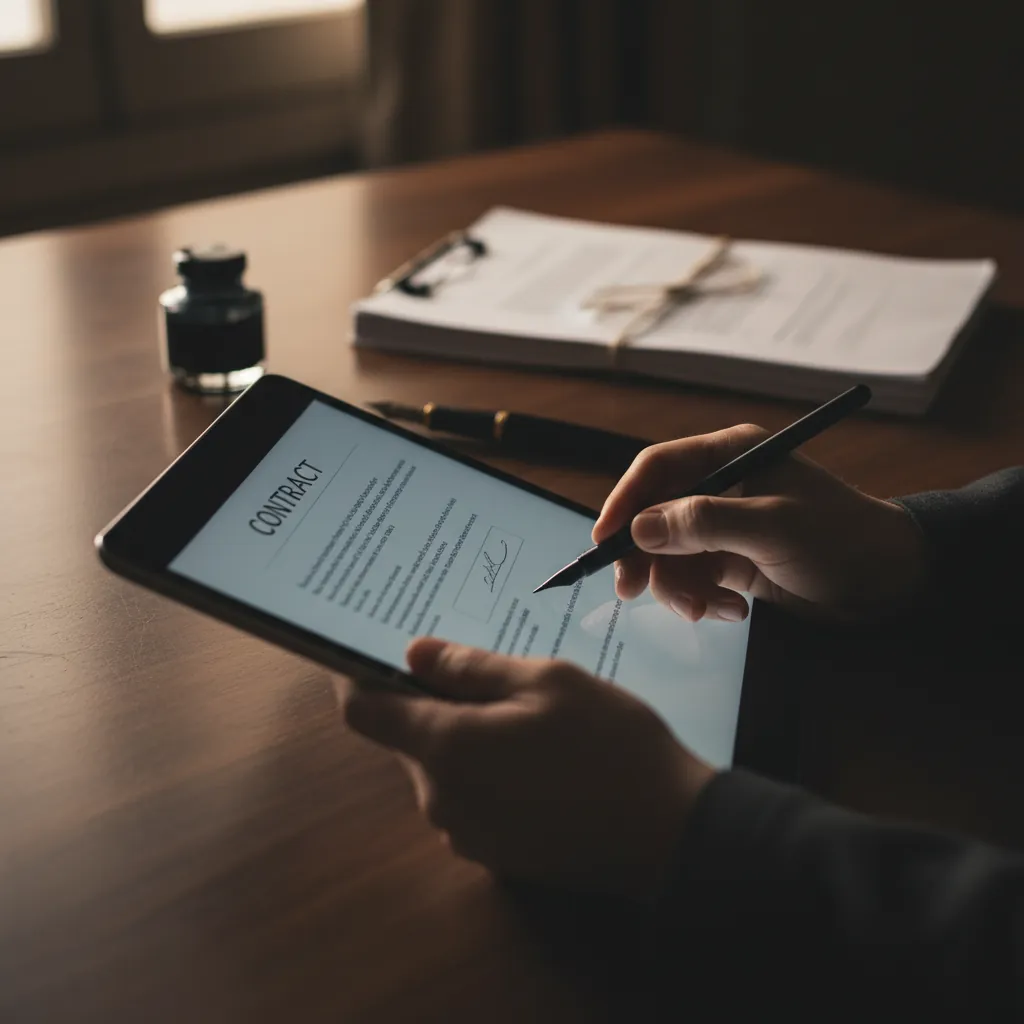
For solo operators and small teams, getting agreements signed is just part of doing business. Whether you are a photographer booking a wedding, a contractor starting a remodel, a landlord renting a unit, or a freelancer landing a new client, a signed document marks the official start. For years, the ink-on-paper, "wet" signature was the only way to go. Today, electronic signatures are common. But when does one matter more than the other? Let's talk about it.
Think about the traditional way. You print a contract. You sit down with a client, or mail it to them. They read it, pick up a pen, and sign their name. You do the same. This physical act, the ink on paper, has a long history. It feels official, concrete. For generations, this was how trust was built and agreements were finalized.
For many, the wet signature still carries a certain weight. It feels permanent. You have a physical copy in your hand. This method has worked for centuries, and it still works today for some specific situations. Maybe you are closing on a house, or dealing with certain government documents. In those cases, the process is often slow, deliberate, and requires a physical presence or a trip to the post office.
But for most day-to-day business, the old way comes with some real drawbacks.
Imagine you just landed a new client for your small marketing agency. You draft the service agreement, print it, and put it in the mail. Then you wait. And wait. The client receives it, signs it, and mails it back. Another few days go by. By the time you both have signed copies, a week might have passed.
That week is lost time. It is time you could have spent starting the project, onboarding the client, or even sending an initial invoice. For a freelance photographer, a delay in signing a booking agreement could mean losing a date to another job. For a contractor, it might mean pushing back the start of a project, which impacts your schedule and cash flow. Each day a document sits in transit or on someone's desk is a day your business isn't moving forward as quickly as it could.
Then there is the hassle. Printing, scanning, faxing, emailing, re-printing, signing, re-scanning. It is a cycle that eats up minutes from your day, time that could be spent on billable work or growing your business. These small delays add up. A single document might only take 15 minutes of back-and-forth, but if you handle 20 documents a month, that is 5 hours. That is a half-day of work you could have done instead.
This is where electronic signatures step in. They are not just a digital scribble. For an electronic signature to be legally valid, it needs to meet certain criteria, especially in the United States under the ESIGN Act (Electronic Signatures in Global and National Commerce Act) and the UETA (Uniform Electronic Transactions Act). These laws generally say that an electronic signature is just as good as a wet signature, as long as a few things are true:
This last point is where the "when it matters" really comes into play. A good electronic signature system does more than just let someone type their name or draw it with a mouse. It creates an audit trail. This trail is like a digital witness to the signing process. It records things like:
At vouch.ink, we take this a step further with a hash-chained audit trail. This means every step of the signing process is cryptographically linked, making it incredibly difficult to tamper with. This audit trail is the proof. It is what gives your electronic signature its legal weight and protects you if there is ever a dispute. It is what makes an electronic signature just as, if not more, reliable than a wet signature for most business dealings.
Many solo operators and small business owners wonder if electronic signatures are truly sufficient for "big" agreements. A client contract worth thousands of dollars, a year-long lease agreement, or a non-disclosure agreement with a new partner. The answer, for the vast majority of these situations, is a resounding no, a wet signature is not always better.
For most business transactions that freelancers, contractors, landlords, and small agencies handle, an electronic signature carries the same legal weight as a wet one. This includes:
The key is the legal framework provided by ESIGN and UETA, combined with a proper audit trail. The perception that a wet signature is somehow "more" legal or "more" binding is largely outdated for commercial transactions. The situations where a wet signature is explicitly required by law are rare and typically involve very specific legal documents like wills, certain family law documents, or some real estate transfers that are often handled by specific legal professionals. For your day-to-day business operations, electronic signatures are not just convenient, they are legally sound.
Let's talk about money. Every solo operator knows that cash flow is king. The faster you get a signed contract, the faster you can start work, and the faster you can send an invoice.
Consider a contractor bidding on a small renovation project. They send the proposal. If the client needs to print, sign, scan, and email it back, that could add a day or two to the process. If they use an electronic signature, they can review and sign it on their phone or computer within minutes of receiving it. That means the contractor can schedule the work sooner, order materials, and get the project moving.
For a freelance designer, a signed project proposal means the initial deposit can be requested immediately. For a landlord, a signed lease means the first month's rent and security deposit can be collected without delay, and the unit can be officially occupied. These small time savings directly impact your bank account. If you are waiting days for a signature, you are waiting days to get paid. Electronic signatures cut down on that waiting game, allowing you to move from proposal to payment much more quickly. This speed is not just about convenience; it is about the financial health of your business.
Paper documents are easy to lose, damage, or misplace. A coffee spill, a misplaced file, or a fire can destroy critical records. While you might scan paper documents, the original signed copy is still a physical item that needs storage and protection.
Electronic signatures, especially those with a detailed audit trail, offer a superior way to keep records straight. Every document signed through vouch.ink comes with a hash-chained audit trail. This means that for every signature, there is a clear, unchangeable record of:
This audit trail is your proof in case of a dispute. If a client ever claims they did not agree to a specific term, you have an immutable record showing exactly what they signed, when, and how. It removes ambiguity and provides a clear, verifiable history of the transaction. This level of detail and security is incredibly difficult, if not impossible, to achieve with a simple wet signature on a piece of paper. It protects both you and your clients by providing transparency and accountability.
Moving from wet signatures to electronic ones does not have to be complicated. For solo operators and small teams, it is about finding a tool that is easy to use, legally compliant, and fits your budget.
The decision between an electronic signature and a wet signature often comes down to efficiency, legal standing, and protection. For the vast majority of business transactions, electronic signatures are not just a convenient alternative, they are the smarter choice, offering speed, verifiable proof, and legal backing.
Ready to simplify your signing process and get back to doing what you do best? Explore how vouch.ink can help your business. Our free plan includes everything you need to get started with legally binding electronic signatures and a hash-chained audit trail. See all our options at https://vouch.ink/pricing and start signing smarter today at https://vouch.ink/.
Q: How many documents can I sign electronically for free with vouch.ink? A: You can sign up to 5 documents per month on our free plan.
Q: How quickly does an electronic signature become legally valid? A: An electronic signature is legally valid the moment it is applied, effectively taking 0 seconds for legal standing.
Q: What percentage of business documents can be legally signed electronically? A: Over 95% of common business documents, including contracts, agreements, and invoices, can be legally signed electronically.
Q: How long does vouch.ink store the audit trail for signed documents? A: Vouch.ink stores the hash-chained audit trail for every signed document for an indefinite period, providing long-term proof.
Q: What is the average time saved per document by using electronic signatures instead of wet signatures? A: Businesses typically save around 30 minutes per document by switching from wet to electronic signatures, accounting for printing, mailing, and processing time.
An electronic signature is a digital mark or process indicating agreement, while a wet signature is a handwritten mark made with ink on paper. 1
Yes, electronic signatures hold legal validity in many jurisdictions globally, including under laws like ESIGN in the US and eIDAS in the EU. 2
Certain specific legal documents, such as wills, trusts, or some real estate transfers, may still require a traditional wet signature by law. 3