The Photographer's Wedding Contract: What to Include + a Template
A wedding photography contract needs six clauses that most free templates skip — and each one exists because a photographer learned it the hard way.
A wedding photography contract needs six clauses that most free templates skip — and each one exists because a photographer learned it the hard way.
A wedding photography contract exists for one reason: to put in writing what both parties agreed to before they agreed to it.
The six clauses below aren't legal boilerplate. They're the result of disputes that have actually happened — cancellations the week before, hard drives that failed, second shooters who didn't show. Each clause closes one of those gaps.
Most free templates cover payment schedule and delivery timeline. That's the floor. Here's what's above it.
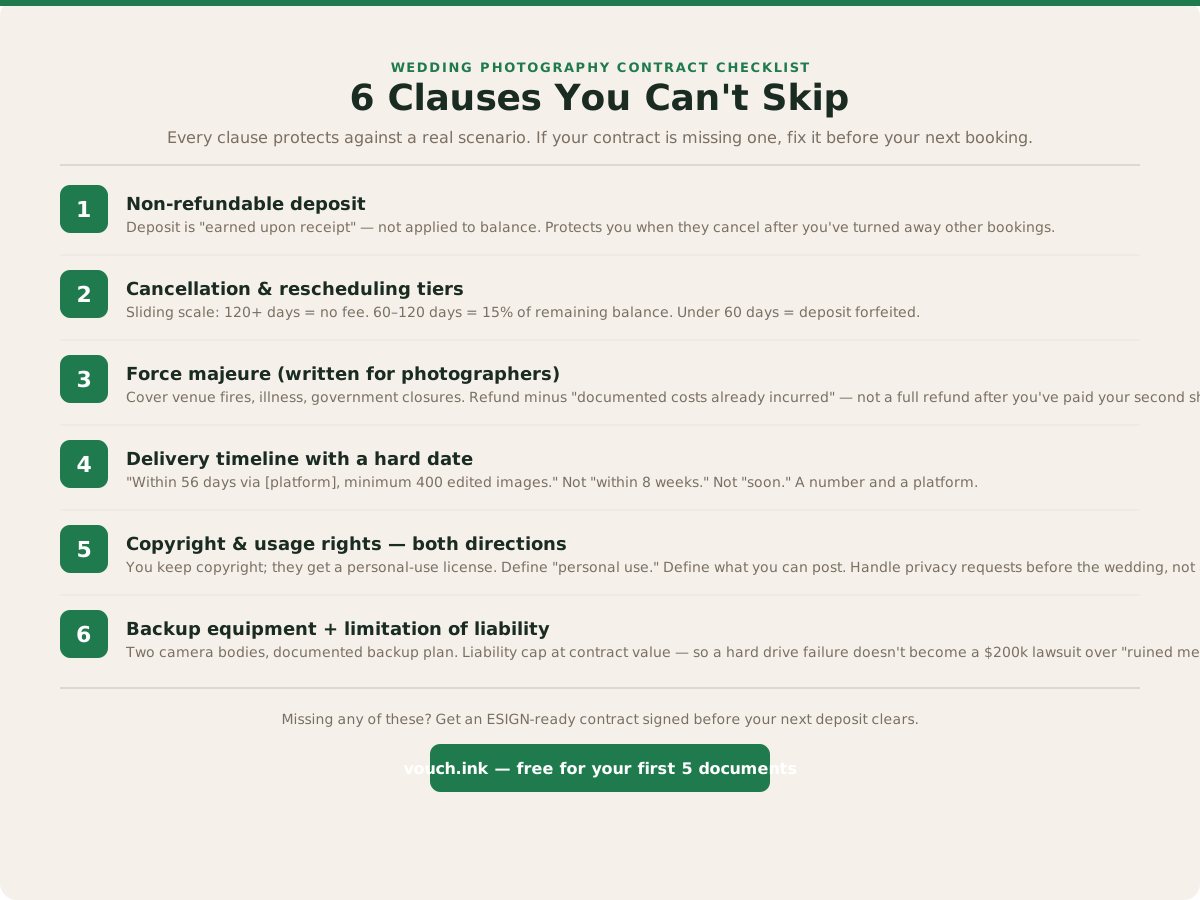
The clause: a deposit (typically 25–50% of the total) is non-refundable and holds the date exclusively.
Why it matters: a couple books you for their October date, you turn away two other October inquiries, and they cancel in September. Without this clause, you're entitled to nothing under most state default contract rules.
The language should say the deposit is "earned upon receipt as consideration for holding the date" — not "applied toward the balance." That distinction matters if a court ever looks at it.
Separate from the deposit clause. This one covers what happens if the couple reschedules (not cancels), and what happens if you have to cancel.
Your cancellation clause should include:
A clause I've seen work well: rescheduling with 120+ days notice costs nothing; 60–120 days costs 15% of the remaining balance; under 60 days forfeits the remaining deposit.
Generic force majeure clauses cover wars and earthquakes. Write yours for the actual events that affect weddings: venue fires, weather-related venue closures, serious illness (yours or the couple's), and — after 2020 — government restrictions on gatherings.
The clause should say that in a qualifying event, you'll either reschedule at no penalty or issue a refund minus documented costs already incurred. "Documented costs" is the key phrase — it keeps you from having to refund everything after you've already paid for your second shooter's travel.
"Photos delivered within 8 weeks" is unenforceable ambiguity. "Edited gallery delivered no later than 56 days after the wedding date via [platform]" is not.
| What to specify | Why |
|---|---|
| Number of calendar days (not "weeks" or "soon") | Weeks are ambiguous; 56 days is not |
| Delivery platform | So there's no dispute about whether a Dropbox link counts |
| Minimum edited image count | Protects the couple; they know what they're buying |
| Sneak-peek timeline if you offer one | Sets expectations for social media posts |
Couples share their delivery experience on The Knot and Google. A clear timeline you meet beats an vague promise you overshoot.
Two things need to be explicit:
What the couple can do: Print for personal use, share on social media, send to family. Usually: yes. License to a vendor or magazine: almost always no without a separate agreement.
What you can do: Use images in your portfolio, website, social media, and contest submissions. If the couple wants a privacy clause (common for high-profile families), you need to know before the wedding — not when you post the gallery.
The default under US copyright law is that you own the copyright. But "I own the copyright" doesn't tell the couple what they can do with images they paid $4,200 for. Write it out.
If your primary camera body fails during the ceremony, what happens? If your second shooter cancels the morning of the wedding, who replaces them?
Your contract should state:
"Good-faith effort" sounds soft, but it's actually the right standard — it shows you have a plan without promising an outcome you can't control.
The clauses above translate into a contract that runs 3–4 pages. Single-spaced, plain English, no Latin.
The structure that works:
Keep limitation of liability. The US Copyright Act makes clear that the photographer is the default copyright owner for original works — your contract should reflect that and spell out what the license grants. It caps what a couple can sue you for to the contract value — so a hard drive failure doesn't become a $200,000 lawsuit over "ruined memories." Courts enforce these clauses routinely in service contracts.
The workflow that eliminates "I'll sign it later":
This sequence means the signed contract and the deposit happen in the same 10-minute window. No signed contract, no deposit processed, no date held. Simple.
Photographers who use this workflow report near-zero "I forgot to sign" follow-up. The couple has a financial reason to sign immediately.
Send your first contract free — no account needed →
For the inquiry-to-deposit workflow that precedes the contract, see Wedding contracts that don't slow down the inquiry. For pricing context, vouch.ink's Personal plan is $5/month for 20 contracts a month, and Business is $8/month for unlimited.
Yes. The federal ESIGN Act and UETA give electronic signatures the same legal weight as wet-ink signatures for business contracts including photography agreements. The key is that the signer must affirmatively consent and the signing must be documented with an audit trail.
Without a contract, disputes over cancellations, image delivery timelines, copyright, and deposit refunds are resolved by state default rules — which rarely favor either party cleanly. A signed contract moves those decisions from a judge's discretion to your agreed terms.
Yes, with caveats. Most free templates cover the basics but skip clauses for force majeure, secondary shooter rights, and album delivery timelines. Review any template against this list before sending it to a client.
At booking, before any deposit changes hands. The deposit and the signed contract should happen in the same workflow — deposit paid, contract signed, date held. Never hold a date on a verbal commitment alone.
The photographer, by default under US copyright law — unless the contract transfers copyright to the client. Most professional photographers retain copyright and grant the couple a personal use license. The contract should spell out exactly what 'personal use' means (prints, social media, albums) and what it excludes (commercial licensing).