← All postsFor tutors + coachesMay 19, 2026 · 5 min read
The Tutor / Coach Contract: Cancellation, Late Fees, and Getting Paid
A tutor contract template covers exactly three things that matter: when you get paid, what happens when a client cancels last-minute, and how to enforce it without an awkward conversation.
A tutor contract template is a one-page document covering three things: when you get paid, what happens when a client no-shows, and how you end the arrangement if it stops working. You don't need a lawyer and you don't need three pages of definitions — you need a signature before Session 1.
This guide covers the five clauses worth including, the cancellation window that actually changes client behavior, and a signing workflow that takes under two minutes from confirmed booking to signed agreement. No awkward conversations about "the paperwork." Just a link and a click.
What Goes Into a Tutor Contract Template
Most tutors skip contracts because the relationship starts casually — a parent texts, you pick a time, the first session happens. The contract conversation never comes up. Then someone cancels at 6 AM for a 7 AM session, and you absorb the hour.
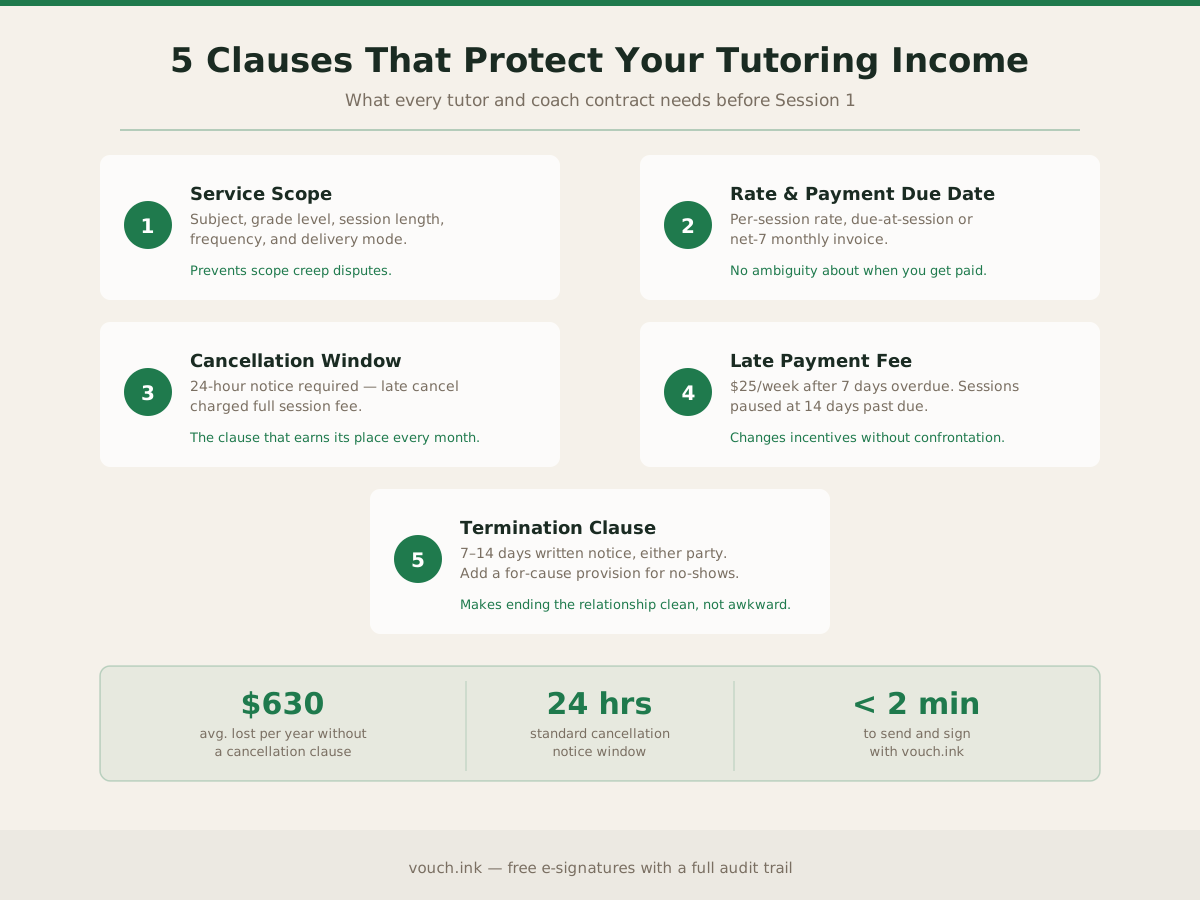
A solid tutoring contract has five sections:
- Parties — Your legal name (or business name), the student's name, and the parent or guardian's name if the student is under 18.
- Services — Subject(s), grade level or skill level, session length, weekly frequency, and delivery mode (in-person, online, or hybrid).
- Payment — Hourly or per-session rate, when payment is due (at session or net-7), and accepted payment methods.
- Cancellation — The notice window (24 or 48 hours) and what you charge when a client misses it. This is the clause that earns its place every month.
- Termination — Either party can end the agreement with 7–14 days written notice. The clause doesn't require a long explanation — it just makes exits clean.
If you coach adults — business coaches, fitness coaches, 1:1 skill trainers — add a results disclaimer: "Coaching is advisory in nature and does not guarantee specific outcomes." One sentence. It manages expectations before they become disputes.
The Cancellation Clause That Actually Gets You Paid
This is the clause tutors water down most often. "I don't want to seem harsh." Then they absorb three no-shows a semester and quietly do the math.
A 24-hour cancellation window is the industry standard. Clients who book recurring sessions come to treat it like a rule — they give notice because they know the alternative costs them. Here's sample language you can drop in:
Client may cancel or reschedule a session with at least 24 hours' advance notice at no charge. Cancellations made within 24 hours of the scheduled session will be charged the full session fee. More than two late cancellations within any 30-day period is grounds for termination of this agreement.
The termination trigger is important. Without it, some clients will treat the cancellation fee as a subscription to flexible scheduling — pay the fee, skip the session, no real consequence beyond the charge. The termination clause gives you an exit without requiring a difficult conversation.
Real scenario: Priya tutors high-school math in Chicago — 11 active students at $90/hour, two sessions per week each. In her first year without a contract, seven late cancellations cost her $630. She added the 24-hour clause before year two. In the following 12 months: two late cancellations, both paid in full. Same students, different behavior — the contract changed the incentive.
A 48-hour window makes more sense for intensive test-prep programs where you're prepping custom materials per session, or for group sessions with multiple participants. For standard recurring weekly tutoring, 24 hours is the norm and clients won't push back on it if it's in the contract they sign before Session 1.
Payment Terms and Late Fees
|
Due-at-Session |
Net-7 Monthly Invoice |
| Best for |
Under 8 students, cash or card |
Larger rosters, bank transfer |
| Admin overhead |
Minimal |
One billing run per month |
| Late fee enforcement |
On the spot |
Applied to next invoice |
| Cash flow |
Immediate |
7-day lag |
Choose whichever model you'll actually track consistently. Switching payment terms halfway through a client relationship creates confusion.
Add a late fee clause regardless: "Invoices unpaid after 7 days are subject to a $25 late fee per week until settled." $25 flat per week is the most common rate in tutoring contracts. Some tutors use 1.5% per month — mathematically similar for most invoice sizes, but explain it in plain terms on the contract.
The clause most tutors skip: "Tutor reserves the right to pause sessions for accounts more than 14 days past due." You don't have to invoke it, but having it means the client knows the consequence exists.
How and When to Send It
Timing matters as much as content. Sending a contract after a conflict starts means you're negotiating from the wrong side — the client already received your service.
Send the contract the same day you confirm the first session. Frame it simply: "Here's the one-page doc I use with all my students — covers scheduling, payment, and cancellation policy. Takes about a minute to sign."
Most clients sign within a few hours. The act of signing before Session 1 establishes a professional relationship with clear rules from day one, which makes every later policy conversation easier.
For the structure of the agreement itself, our independent contractor agreement template is a solid starting point — replace the deliverables section with a session schedule and most of the clauses transfer directly.
Under the ESIGN Act (15 U.S.C. § 7001), e-signed documents are enforceable across the US when the signer had a reasonable opportunity to review the document before signing. Sending a link to a one-page contract and asking for a digital signature satisfies that standard.
Vouch.ink's free plan handles most solo tutors — send the contract, get a signed copy with a full audit trail attached, no subscription required.
The Two-Minute Signing Workflow
Once the contract is drafted, sending it takes under two minutes:
- Open vouch.ink, upload or paste your tutoring contract.
- Enter the client's email address.
- Client receives a link, opens it in the browser, signs — no account required on their end.
- Both parties get a signed copy automatically. The audit trail records the timestamp, IP address, and signing sequence.
No printing. No scanning. No "did you get my email?" follow-up three days later.
Send your first contract free →