The 7-Minute Lease Renewal: A Mindful Landlord Workflow
Renew a lease in 7 minutes flat — the step-by-step workflow small landlords use to send, sign, and file renewal docs without chasing tenants.
Renew a lease in 7 minutes flat — the step-by-step workflow small landlords use to send, sign, and file renewal docs without chasing tenants.

A lease renewal takes 7 minutes of your time when you have a system. Here's the exact landlord workflow — from pulling the renewal doc to getting the e-signature back and filed — without a single phone call, printed page, or Saturday morning text.
The renewal itself isn't complicated. What eats time is the gap between "I should send that renewal" and "I actually sent it." Phone tags. A PDF emailed to a personal account. The tenant prints it, signs it, loses the scan. Texts you at 9 p.m.
A small landlord managing 47 units in Towson switched to a structured renewal workflow and cut his average time from 2–3 hours per tenant to under 8 minutes. The math: at 2 hours × 47 units, that's 94 hours a year spent on renewals. At 8 minutes each, it's under 6. Same outcome, 88 hours returned.
Here's what the 7-minute version looks like from your side.
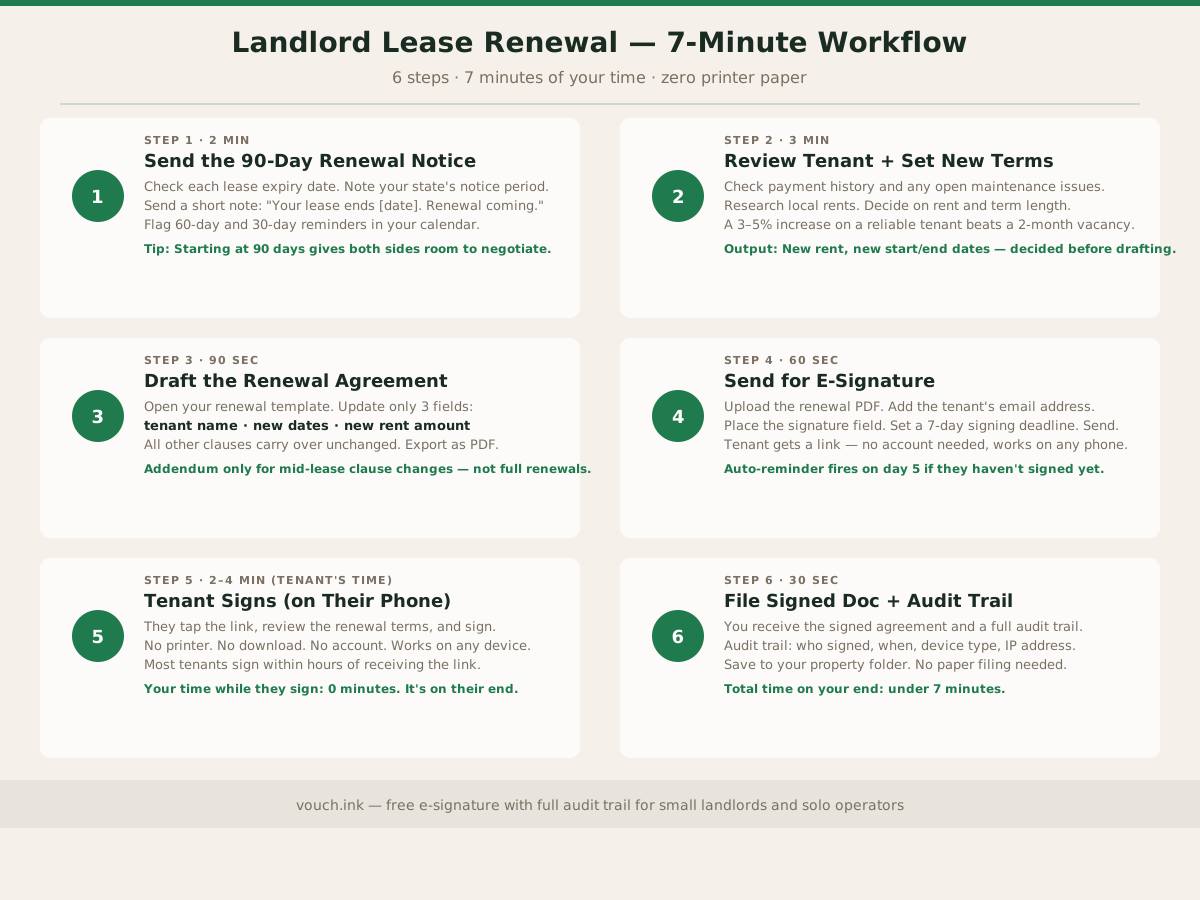
Step 1: Pull the renewal doc (90 seconds)
Your renewal agreement should live in one place — a template you update once a year. Change three fields: tenant name, new lease dates, new rent amount. If you're spending 20 minutes hunting for last year's lease to copy the clauses, that's the first thing to fix.
Step 2: Send for e-signature (60 seconds)
Upload the doc, add the tenant's email, place the signature field, and send. Under the federal ESIGN Act (15 U.S.C. § 7001), e-signed lease renewals are recognized on par with paper agreements — the statute requires documented consent to the electronic process, which the signing platform collects before the tenant sees anything. vouch.ink's free plan handles a full renewal season for most small landlords.
Step 3: Tenant signs on their phone (2–4 minutes)
Your tenant gets a link by email. They tap, review, and sign — no account, no download, no printer required. Most tenants sign within a few hours. This is where most of the 7 minutes lives — it's on their end, not yours.
Step 4: File the completed doc (30 seconds)
Once signed, you receive the completed agreement and a full audit trail: who signed, when, from what device, and the IP address. Save it to your property folder. Done.
This is where small landlords often make the wrong call.
| Scenario | Use a Renewal Agreement | Use an Addendum |
|---|---|---|
| Same tenant, new 12-month term | ✓ | |
| Rent increase for new term | ✓ | |
| Adding a pet clause mid-lease | ✓ | |
| Short 3-month extension | ✓ | |
| Month-to-month conversion | ✓ | |
| Adding a roommate to existing lease | ✓ |
A renewal agreement starts the clock over — new dates, new terms, clean slate. An addendum modifies the existing lease without changing the end date. For annual renewals with a rent bump, a fresh renewal agreement is cleaner in a dispute because there's no ambiguity about which version controls.
Most state landlord-tenant laws require written notice 30–60 days before lease expiration. But 30 days is a tight window that creates pressure on both sides.
Send at 90 days out for three reasons:
The same principle applies to other time-sensitive documents in your operation. Fast on-site change orders work because the doc is ready before the conversation — lease renewals are no different. Your system should be faster than the negotiation.
Every signed renewal should leave a timestamped record. When a tenant later claims they "never agreed to" the rent increase clause, the audit trail is your evidence.
A complete audit trail captures:
That's the same evidentiary chain a paper trail would need to establish — just automatic, always complete, and not dependent on anyone's filing cabinet.
Waiting until 30 days out. You're negotiating under deadline pressure with a tenant who knows you need an answer fast. That leverage disappears when you start 90 days out.
Sending the wrong document type. A one-line email saying "same terms, same rent for another year" isn't a renewal agreement — it has no signatures, no stated term, and no documentation of any rent change. Month-to-month can be intentional and valid, but it should be a deliberate choice, not an administrative accident.
No deadline on the signing request. Without a signing deadline, tenants will get to it eventually. Set a 7-day window. Platforms that support automatic reminders will follow up on day 5 without you lifting a finger.
If your current renewal workflow still involves PDF attachments in email chains and texts on Saturday morning, it's time for a better process. Start with a free vouch.ink account — send your first renewal doc, get it signed with a full audit trail, and see how the 7-minute version feels.
Most states require 30–60 days written notice before lease expiration. Sending 90 days out gives both sides room to negotiate and keeps you compliant even if your tenant takes two weeks to respond.
Yes. Under the federal ESIGN Act and state UETA laws, e-signed lease renewals are recognized alongside paper signatures — the key requirement is documented consent to the electronic signing process, which platforms collect automatically.
A renewal starts a new term with new dates and possibly new rent. An addendum modifies specific clauses without restarting the clock. For annual renewals with a rent increase, a fresh renewal agreement is cleaner and easier to read in a dispute.
For standard residential renewals with the same tenant and minor rent adjustments, most small landlords handle this themselves. If you're adding new clauses, converting to month-to-month, or operating in a rent-controlled jurisdiction, a legal review is worth the cost.
Most leases automatically convert to month-to-month tenancy if neither party acts. Set a clear 7-day signing deadline in the renewal request and set a reminder to follow up on day 5 so you're not chasing anyone.