The Reschedule Clause That Saves Spring Bookings (Real Photographer Workflow)
A well-crafted reschedule clause keeps your deposit, locks in a new date fast, and stops the 3-week email back-and-forth that kills spring bookings.
A well-crafted reschedule clause keeps your deposit, locks in a new date fast, and stops the 3-week email back-and-forth that kills spring bookings.

A photographer reschedule clause tells your client exactly what happens when a date changes: how many months they have to rebook, what fee applies, and that the new date isn't confirmed until both parties sign a short amendment. Without one, a postponed spring wedding becomes a three-week negotiation in your inbox — and by week two, they've started shopping for someone cheaper.
Most photographers know they need one. Fewer know what it has to contain to hold up beyond a polite conversation.
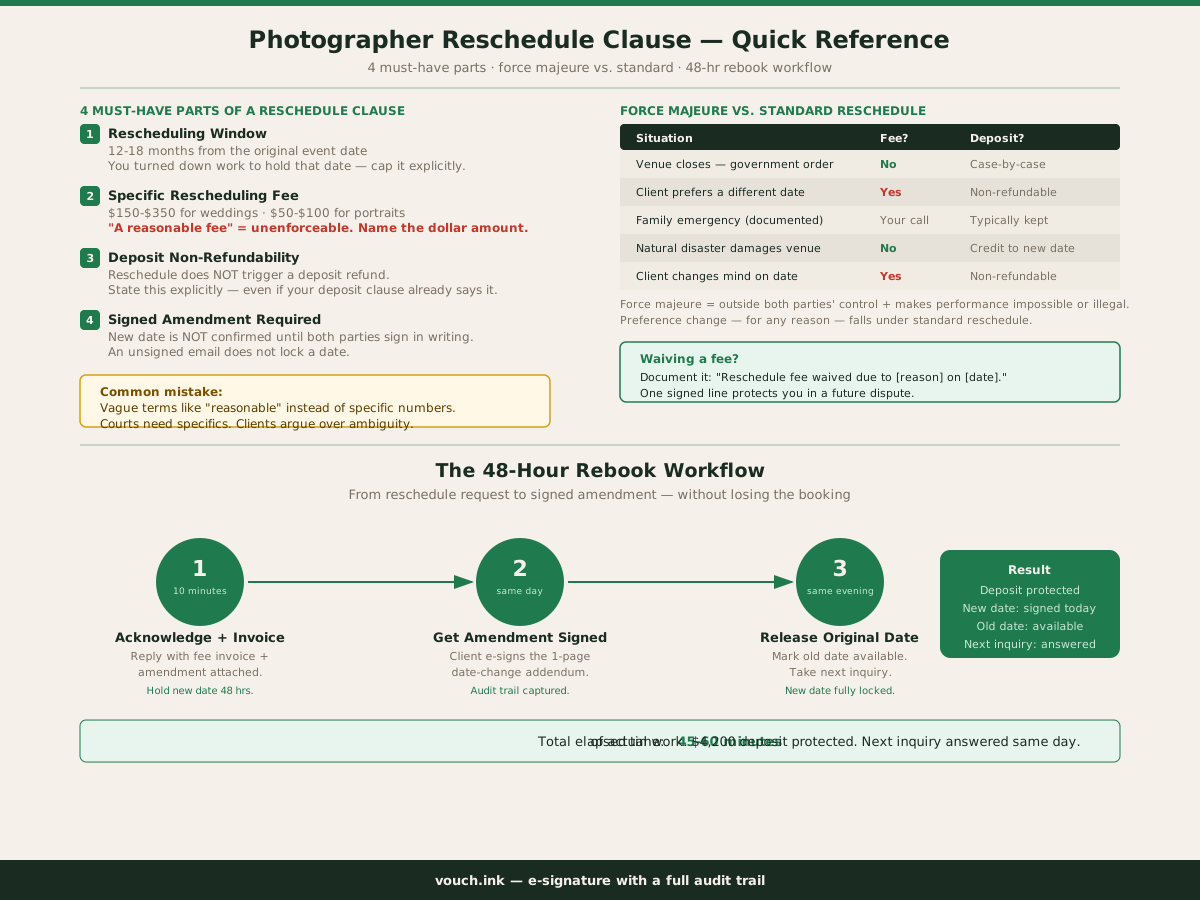
A reschedule clause needs four working parts:
1. Rescheduling window. How long does the client have to rebook? Twelve to eighteen months from the original event date is the most common range. This matters because photographers carry liability for held dates — time you turned down other work.
2. The rescheduling fee. This is the administrative and held-date cost. For weddings, $150–$350 is typical. For portrait sessions, $50–$100. Name a specific dollar amount. "A reasonable fee" is not enforceable.
3. Deposit non-refundability language. The reschedule clause should explicitly state that a reschedule does not trigger a deposit refund. Your deposit agreement already covers this, but repetition prevents "I thought rescheduling was different" disputes.
4. Date-change amendment requirement. This is the part most contracts leave out. State explicitly that the new date is NOT confirmed until both parties sign a written amendment. Verbal agreements don't hold. An unsigned "I'll book May 15" email doesn't hold either.
A date-change amendment is a short addendum — one page, sometimes less — that updates a single field (the event date) while preserving every other term from the original contract.
What stays the same:
What changes:
The 48-hour rule. Send the amendment within 24 hours of the reschedule request and set a 48-hour deadline for the client to sign. Every extra day a new date sits unsigned is a day another inquiry could book the same slot. Photographers who leave this open-ended lose 8–12% of rescheduled bookings to "we went in another direction" replies three weeks later.
These two situations look the same from the inbox. They're not.
| Situation | Clause | Fee applies? | Deposit |
|---|---|---|---|
| Venue closes — government order | Force majeure | Typically no | Case-by-case |
| Client prefers a different date | Standard reschedule | Yes | Non-refundable |
| Family emergency (documented) | Standard reschedule | Your discretion | Typically kept |
| Natural disaster damages venue | Force majeure | No | Credit to new date |
| Client changes mind on date | Standard reschedule | Yes | Non-refundable |
Force majeure covers circumstances outside both parties' control that make performance impossible or illegal. A client preferring a different date — for any reason short of a documented emergency — falls under the standard reschedule clause.
Your contract should name specific force majeure triggers rather than using the vague "acts of God." Government-mandated venue closures, pandemics that prohibit gatherings, and natural disasters that damage the venue are examples courts and small-claims arbitrators understand.
For more on how electronic signatures on contract amendments are treated under federal law, the ESIGN Act (15 U.S.C. § 7001) establishes that electronic signatures cannot be denied legal effect solely because they're in electronic form — which covers date-change addenda the same way it covers original contracts.
Here's the scenario that breaks most photographers' spring seasons.
Maria is a wedding photographer with a $4,200 deposit locked in for April 19. On February 3rd, her client emails: the venue had water damage and they want to move to June 7. Maria has nothing on June 7 yet, so the rescheduling makes sense — but June 7 is her most popular weekend, and two other inquiries are sitting in her inbox.
Without a signed amendment, those inquiries stay on hold indefinitely. With the right workflow, June 7 is locked within the hour.
Step 1 — Acknowledge and invoice in the same message (10 minutes). Reply to the reschedule request with a single email: confirm you can hold June 7 for 48 hours, attach the reschedule fee invoice for $200, and attach the date-change amendment for their signature. Don't separate these into multiple emails. One message, two attachments.
Step 2 — Get the amendment signed digitally (same day). The amendment is one page. Clients can sign from their phone in under two minutes without downloading anything or creating an account. Once signed, both parties get a copy with a full audit trail — timestamp, IP address, document hash — that protects you if anyone later claims the new date was "verbal only." You can set this up through your vouch.ink account.
Step 3 — Release your hold on the original date (same evening). Once the amendment is signed and the reschedule fee paid, mark April 19 as available and take your next inquiry. The signed amendment is your paper trail. The original contract still covers everything else.
Total elapsed time: 45–60 minutes of actual work. The two inquiries waiting on June 7 get their answer the same day.
If you have a rescheduling clause but haven't reviewed it since you first wrote it, three things are worth confirming:
Your photographer deposit contract is the companion piece — the reschedule clause and the deposit clause reference each other, and a gap between them is where disputes get started.
Ready to get a date-change amendment signed in under two minutes? Create your vouch.ink account and send your first amendment today.
At minimum: a deadline for rescheduling (typically 12-18 months from the original date), a rescheduling fee, language on deposit non-refundability, and a requirement that the new date be confirmed in a signed contract amendment.
Yes. A rescheduling fee — commonly $150-$350 for weddings — compensates for the held date and administrative work. The fee must be stated in the original contract before a client signs.
Force majeure covers circumstances outside either party's control — natural disasters, venue closures, government restrictions. A good clause names specific triggers and still specifies re-booking terms rather than leaving them open-ended.
Within 48-72 hours of the reschedule request. Leaving a new date unconfirmed for weeks creates booking conflicts and gives clients time to shop around. A digital signature on a short date-change amendment locks it down same day.
No. A date-change amendment preserves all original terms — deliverables, payment schedule, cancellation penalties — and only updates the event date. Both parties sign the amendment, not a whole new contract.